


Childcare Centre Cleaning Checklist: Daily, Weekly & Periodic Tasks
A childcare centre can look tidy and still have problems hiding in plain sight: sticky door handles, shared toys, food crumbs under tables, nap mats that need attention, and bathroom touchpoints that get used all day.
Cleaning in early learning settings has to be practical. Staff need a checklist they can actually follow between drop-off, meals, nappies, activities, rest time, and pick-up. A good system makes the work visible, keeps standards consistent, and reduces the chance that important tasks are missed when the day gets busy.
This guide lays out a clear childcare centre cleaning checklist across daily, weekly, and periodic tasks. Use it as a working template, then adjust it for your rooms, age groups, licensing requirements, and product instructions.

Build the checklist around risk, not just appearance
The goal is not to make every surface smell like disinfectant. The goal is to keep rooms clean, safe, and ready for children.
Start by separating tasks into four categories.
Category | What it means | Common examples |
Cleaning | Removing dirt, crumbs, dust, spills, and visible grime | Sweeping floors, wiping tables, washing toys |
Sanitising | Reducing germs on food contact and child contact surfaces | Meal tables, highchair trays, mouthed toys |
Disinfecting | Treating higher-risk surfaces when needed | Toilets, nappy change areas, bodily fluid spills |
Resetting | Returning the room to a safe, usable state | Restocking soap, removing rubbish, storing supplies |
That distinction matters because not every task needs the same product or frequency. Overusing harsh products can create its own problems, especially in rooms used by infants and toddlers. Follow product labels, required contact times, dilution instructions, and local health guidance.
A useful checklist should answer five questions:
What needs to be cleaned
How often it needs attention
Which product or process to use
Who is responsible
How completion is recorded
If a task is vague, it will be done differently by each person. “Clean bathroom” is too broad. “Wipe taps, flush buttons, toilet seats, door handles, and nappy bin lid” is much easier to follow and check.
Daily Childcare Centre Cleaning Checklist
Daily cleaning includes tasks done before children arrive, throughout the day, and after closing. This is the backbone of the system.
Some jobs happen once. Others happen several times, especially in food, toileting, and infant care areas.
Opening tasks prepare rooms before children arrive
Before families walk in, each room should be checked for hygiene, safety, and supplies.
Area | Daily opening task | Check |
Entry and reception area | Wipe touchpoints such as handles, gates, sign-in surfaces, and railings | No sticky residue or visible marks |
Classrooms | Check floors, tables, chairs, shelves, and soft play areas | Room looks ready and hazards are removed |
Bathrooms | Check toilets, sinks, soap, paper products, bins, and odours | Supplies are stocked |
Nappy change area | Prepare gloves, wipes, liners, bags, disinfectant, and hand hygiene supplies | Change surface is clean and ready |
Kitchen or food prep area | Check benches, sinks, bins, fridge handles, and food contact surfaces | Surfaces are clean before use |
Outdoor play area | Remove litter, animal waste, debris, and unsafe items | Area is safe before play |
These checks do not need to take long, but they should be deliberate. A printed sheet near each area helps staff spot gaps quickly.
During the day cleaning controls the mess as it happens
Childcare rooms change by the hour. Meals, art, toileting, sensory play, and rest time all create different cleaning needs.
Use this part of the checklist for repeated tasks.
Task | When to do it | Notes |
Wipe meal tables and chairs | Before and after meals or snacks | Use the approved process for food contact surfaces |
Clean highchair trays | After each use | Pay attention to edges, straps, and undersides |
Remove food waste | After meals or as needed | Tie bags before odour builds |
Clean mouthed toys | As soon as they are removed from play | Place in a labelled “to wash” tub |
Wipe shared touchpoints | Midday and as needed | Include door handles, taps, light switches, gates, and railings |
Clean spills | Immediately | Use the right process for water, food, paint, or bodily fluids |
Reset bathrooms | Several times daily | Check soap, paper, seats, floors, taps, and bins |
Clean nappy change surface | After every change | Follow required disinfecting steps and contact time |
Sweep food and activity debris | After meals and messy play | Prevent slipping and pests |
Wash hands and support child hand hygiene | At key transitions | Meals, toileting, outdoor play, and messy play |
The best childcare centre cleaning checklist gives staff a rhythm rather than a burden. For example, check bathrooms after outdoor play, wipe touchpoints after lunch, and move mouthed toys to the wash tub as part of normal supervision.

Closing tasks restore the centre for the next day
Closing cleaning should be more thorough than midday cleaning. The aim is to leave the centre dry, reset, and ready.
Area | Daily closing task |
Floors | Vacuum, sweep, or mop according to room type and soil level |
Tables and chairs | Clean all child-height surfaces, including undersides when needed |
Toys | Wash toys used during the day, especially infant and toddler items |
Soft items | Remove soiled dress-ups, cushions, blankets, or covers for laundering |
Bathrooms | Clean toilets, sinks, taps, floors, door handles, and bins |
Nappy areas | Clean and disinfect change surfaces, bin lids, handles, steps, and nearby touchpoints |
Kitchen or food prep area | Clean benches, sinks, appliance handles, floors, bins, and spills |
Bins | Empty rubbish, nappy waste, and food waste as required |
Laundry | Start or sort bibs, sheets, cloths, towels, and other washable items |
Supplies | Restock soap, paper towels, gloves, liners, and cleaning materials |
Security and storage | Lock cleaning products away and leave nothing accessible to children |
At the end of the day, one person should do a final walk-through. This does not need to be a formal inspection every night, but someone should scan for missed bins, wet floors, unsecured products, and rooms that were not reset.
Weekly cleaning catches what daily routines miss
Weekly cleaning is where many centres lose consistency. These tasks are not always urgent in the moment, so they can slip when staffing is tight.
The simplest fix is to assign weekly jobs to specific days. For example, soft toys on Monday, cots on Tuesday, shelves on Wednesday, outdoor equipment on Thursday, and storage checks on Friday.
Weekly checklist for learning rooms
Task | What to include |
Wash washable toys | Blocks, plastic figures, manipulatives, puzzles, play food, and sensory tools |
Clean toy crates and shelves | Empty first, wipe inside corners, dry before replacing items |
Launder soft items | Dress-ups, soft toys where suitable, cushion covers, blankets, fabric play pieces |
Clean rest mats and cots | Check frames, seams, labels, and storage areas |
Dust low and high surfaces | Windowsills, ledges, skirting boards, vents, and shelf tops |
Clean art and sensory areas | Easels, trays, drying racks, containers, and splash zones |
Check reading corners | Cushions, rugs, baskets, and books with visible grime |
Books can be tricky. Most cannot be washed like toys. Remove damaged or heavily soiled books, wipe board books where appropriate, and rotate stock so items can be checked more easily.
Weekly checklist for bathrooms and nappy areas
Bathrooms need daily cleaning, but weekly work should focus on build-up and details.
Task | What to include |
Detail clean toilets and sinks | Hinges, bases, splash areas, tap fittings, and partitions |
Wash step stools | Tops, sides, undersides, and rubber grips |
Clean nappy storage areas | Shelves, baskets, bag dispensers, and spare clothing bins |
Check change mats | Cracks, tears, seams, staining, or damage |
Clean walls and doors | Low-level marks from hands, shoes, and splashes |
Review supplies | Gloves, liners, wipes, soap, paper towels, and spare bags |
A damaged change mat should not sit on a “watch it later” list. If a surface cannot be cleaned properly, it needs repair or replacement.

Weekly checklist for kitchens and food areas
Food areas need a stricter routine because crumbs, spills, and residue build up fast.
Task | What to include |
Clean fridge handles and seals | Include edges and sticky areas |
Check fridge contents | Remove expired, unlabelled, or spoiled items according to policy |
Clean cupboards and drawers | Crumbs, spills, containers, and handles |
Wash bins | Inside, outside, lids, pedals, and surrounding floors |
Detail clean appliances | Microwave, toaster, dishwasher edges, bottle warmers, and kettles where used |
Clean dining equipment | Highchairs, booster seats, straps, trays, and chair legs |
If staff prepare bottles, formula, or meals, the checklist should match the centre’s food safety policy. Keep food preparation cleaning separate from bathroom and nappy products. Colour-coded cloths can help, but only if everyone understands the system.
Periodic Childcare Cleaning Tasks
Periodic cleaning covers monthly, quarterly, term-based, and annual tasks. These jobs keep the centre in good condition and prevent small issues from becoming expensive problems.
This is also where directors and centre managers should look beyond the room-level checklist. Floors, upholstery, ventilation, storage, pest control, and outdoor surfaces all need planned attention.
Monthly tasks
Area | Monthly task |
Floors | Detail clean edges, corners, and under heavy furniture where accessible |
Rugs and mats | Vacuum thoroughly and clean according to material and policy |
Windows and glass | Clean child-height marks, fingerprints, tracks, and sills |
Walls | Remove low-level marks, paint, food residue, and scuffs |
Storage rooms | Remove clutter, expired supplies, broken toys, and unsafe items |
First aid and hygiene stations | Check stock, dates, storage, and cleanliness |
Outdoor toys | Wash ride-ons, water play items, sand toys, and storage tubs |
Drains and wet areas | Check odours, slow drainage, and residue build-up |
Monthly work is a good time to ask one question: What are we walking past every day? The answer may be a stained rug, a sticky gate latch, or a cupboard that no one has fully emptied in months.
Quarterly or term-based tasks
Area | Periodic task |
Carpets and rugs | Arrange deeper cleaning where suitable |
Upholstery | Clean couches, cushions, fabric panels, and soft seating |
Curtains and blinds | Dust, wash, or clean according to material |
Air vents and fans | Dust accessible covers and report maintenance concerns |
Large play equipment | Check seams, handles, wheels, fasteners, and washable surfaces |
Outdoor areas | Pressure clean suitable hard surfaces and check shaded areas |
Sandpits | Maintain according to centre policy and local guidance |
Pest prevention | Review food storage, gaps, waste areas, and evidence of pests |
Schedule these tasks outside child attendance hours where possible. It gives surfaces time to dry and reduces disruption.
Annual or as-needed tasks
Some cleaning tasks do not fit neatly into a weekly or monthly rhythm.
Plan for:
Deep cleaning before reopening after holiday closure
Extra cleaning after illness outbreaks, following health guidance
End-of-year room resets
Professional floor care where needed
Full toy and equipment audits
Water play and outdoor storage reviews
Cleaning after maintenance, painting, or building work
Replacement of items that can no longer be cleaned well
The key word is planned. If periodic cleaning only happens when someone notices a problem, it will compete with daily demands and get delayed.
Make the checklist easy enough to use every day
A checklist is only useful if staff can complete it under real conditions. Long, dense forms often fail because no one has time to read them properly.
Keep each checklist tied to a room or zone. A toddler room, nursery, preschool room, kitchen, staff bathroom, children’s bathroom, laundry, and outdoor yard may each need a different version.
Use clear ownership
Avoid a system where “everyone” owns a task. That often means no one does.
Assign tasks by role or shift:
Task type | Good owner |
Opening room check | Opening educator or room lead |
Meal surface cleaning | Educator overseeing meal transition |
Nappy change cleaning | Person completing the change |
Kitchen closing tasks | Kitchen staff or assigned closer |
End-of-day room reset | Closing educator |
Weekly detail clean | Named staff member or cleaning contractor |
Periodic audit | Director, manager, or nominated supervisor |
If a cleaning contractor handles part of the work, the centre still needs visibility. The contractor’s scope should match the centre’s checklist, and staff should know which tasks remain their responsibility.
For centres that outsource regular cleaning, a professional childcare centre cleaning service can help manage scheduled cleaning outside normal operating hours.
Keep records simple
The record does not need to be complicated. A dated checklist with initials is often enough for routine tasks, unless local rules require more detail.
For higher-risk areas, add more structure:
Nappy change area cleaning log
Bathroom check sheet
Kitchen temperature and cleaning records where required
Toy washing rotation
Laundry log
Incident cleaning record for bodily fluids or illness-related cleaning
Use records to improve routines, not to create paperwork for its own sake. If the same task is missed often, ask why. The issue may be timing, unclear ownership, lack of supplies, or a checklist that is too long.
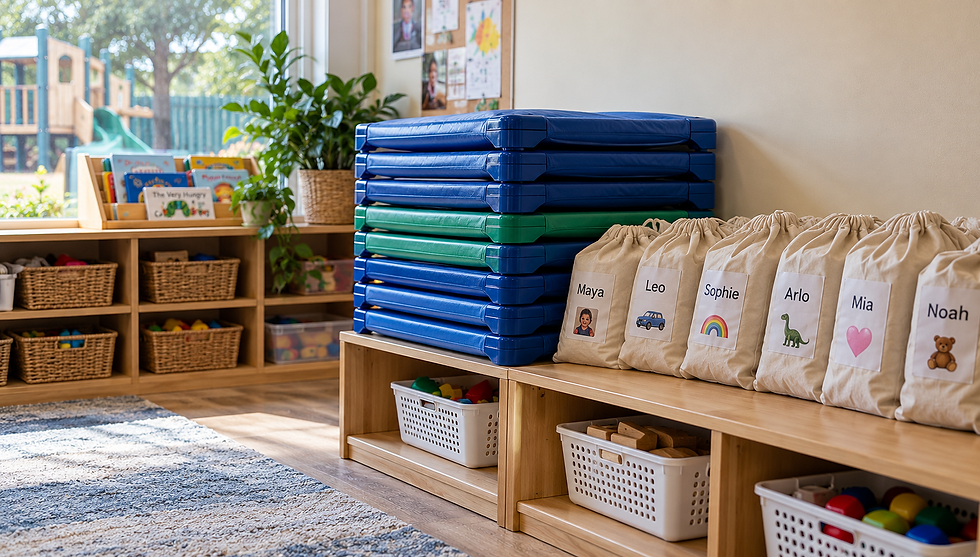
A practical cleaning checklist template
Use this condensed version as a starting point for your own centre.
Frequency | Tasks |
Daily before opening | Check rooms, bathrooms, nappy areas, kitchen, entry points, outdoor play spaces, supplies, and hazards |
Daily during care | Wipe meal areas, clean spills, remove mouthed toys, reset bathrooms, clean nappy surfaces, empty waste as needed, sweep debris, support hand hygiene |
Daily after closing | Clean floors, tables, chairs, toys, bathrooms, nappy areas, kitchen, bins, laundry, touchpoints, and supplies |
Weekly | Wash toy rotations, clean shelves and tubs, launder soft items, detail bathrooms, clean highchairs, check mats, clean storage areas, review supplies |
Monthly | Detail floors and edges, clean windows, check walls, wash outdoor toys, review storage, inspect hygiene stations, check wet areas |
Quarterly or term-based | Deep clean carpets or rugs, clean upholstery, dust vents, review pest prevention, clean large equipment, service outdoor hard surfaces |
Annual or as needed | Deep reset rooms, audit equipment, replace damaged cleanable items, clean after works, respond to illness events based on guidance |
Before adopting any checklist, walk through the centre with it in hand. If a task does not match the room, change it. If a room has a unique risk, add it. Infant rooms, messy play zones, therapy spaces, and food prep areas often need extra detail.
A strong cleaning system is not judged by how impressive the document looks. It is judged by what happens at 11:45 after lunch, at 2:30 after rest time, and at 6:00 when the last room is closing.
The best checklist is clear, visible, assigned, and realistic. Build it around the way the centre actually runs, keep supplies close but safely stored, and review the routine whenever rooms, enrolments, staffing, or regulations change. That is how cleaning becomes part of daily care rather than one more job squeezed in at the end.
Need Help With Childcare Centre Cleaning in Sydney?
Keeping a childcare centre consistently clean can be challenging when staff are already focused on caring for children and running the centre.
FreshScene Cleaning provides professional childcare centre cleaning services across Sydney, with flexible cleaning schedules tailored to your facility, operating hours and cleaning requirements.
Whether you need regular after-hours cleaning or a tailored cleaning schedule, we can work with you to create a practical cleaning plan for your centre.
Looking for reliable childcare centre cleaning in Sydney? Contact FreshScene Cleaning today for a free quote.


